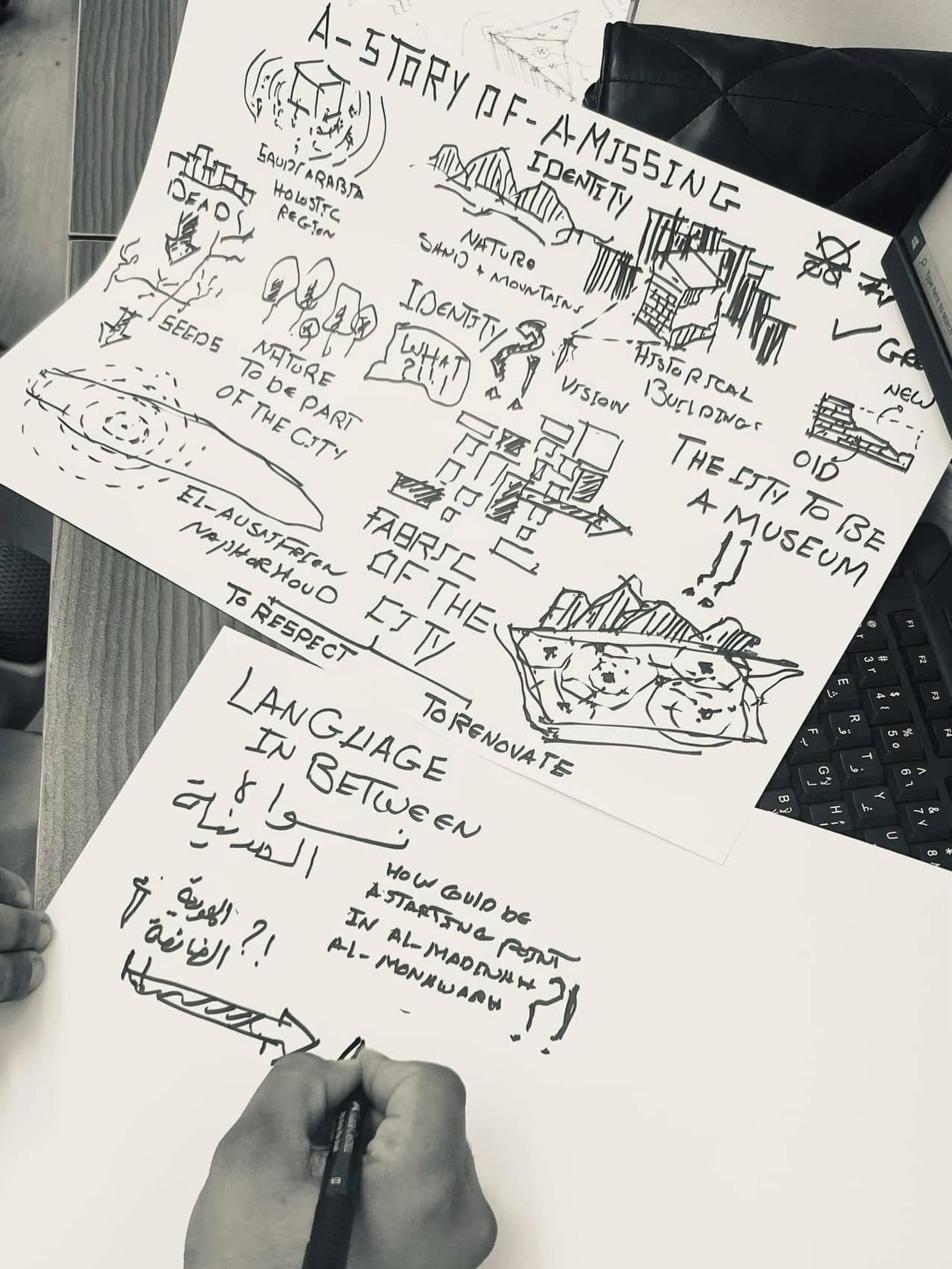
‘From Absence to Identity’ introduces an architectural design study about giving form and character to space. Partner-Z’s accompanying design graphic offers a starting point for considering how a plan can move from an open possibility toward a recognizable spatial idea.
What identity means in a design study
Architectural identity can emerge through the arrangement of spaces and the relationships between them. A clear organizing idea helps the parts of a proposal belong to a coherent whole. That idea may be expressed through a sequence, a central space, an edge, or a pattern of connections.
The title of this study suggests a movement from something undefined toward something legible. It invites attention to the choices that give a design its character. The accompanying graphic should be understood within that conceptual framing; the supplied publication does not name a location or a completed development.
Reading the plan as an architectural argument
A plan can communicate more than the outline of a building. It can establish relationships: what connects, what is separated, and how different parts of a proposal are arranged. Reading a design study involves looking for the reasoning behind those relationships.
At an early stage, a drawing is also a tool for testing ideas. A proposed arrangement can be reconsidered as the purpose of each space becomes clearer. The graphic makes the concept available for discussion while leaving room for further development.
Connecting architecture and the larger composition
The original post associates this study with architecture, masterplanning, and urban design. These fields share a concern with how individual elements contribute to the character of a larger setting. A spatial identity can become more convincing when the parts of a scheme reinforce the same organizing intention.
This is a useful lens for examining a concept: consider how the overall arrangement supports the idea rather than judging each shape in isolation.
A concept open to interpretation
The publication shares a title and a design graphic. It does not establish a project brief, site, program, or technical performance. Within those boundaries, ‘From Absence to Identity’ presents a clear design question: how can deliberate spatial decisions transform an undefined starting point into an architectural idea with a recognizable character?