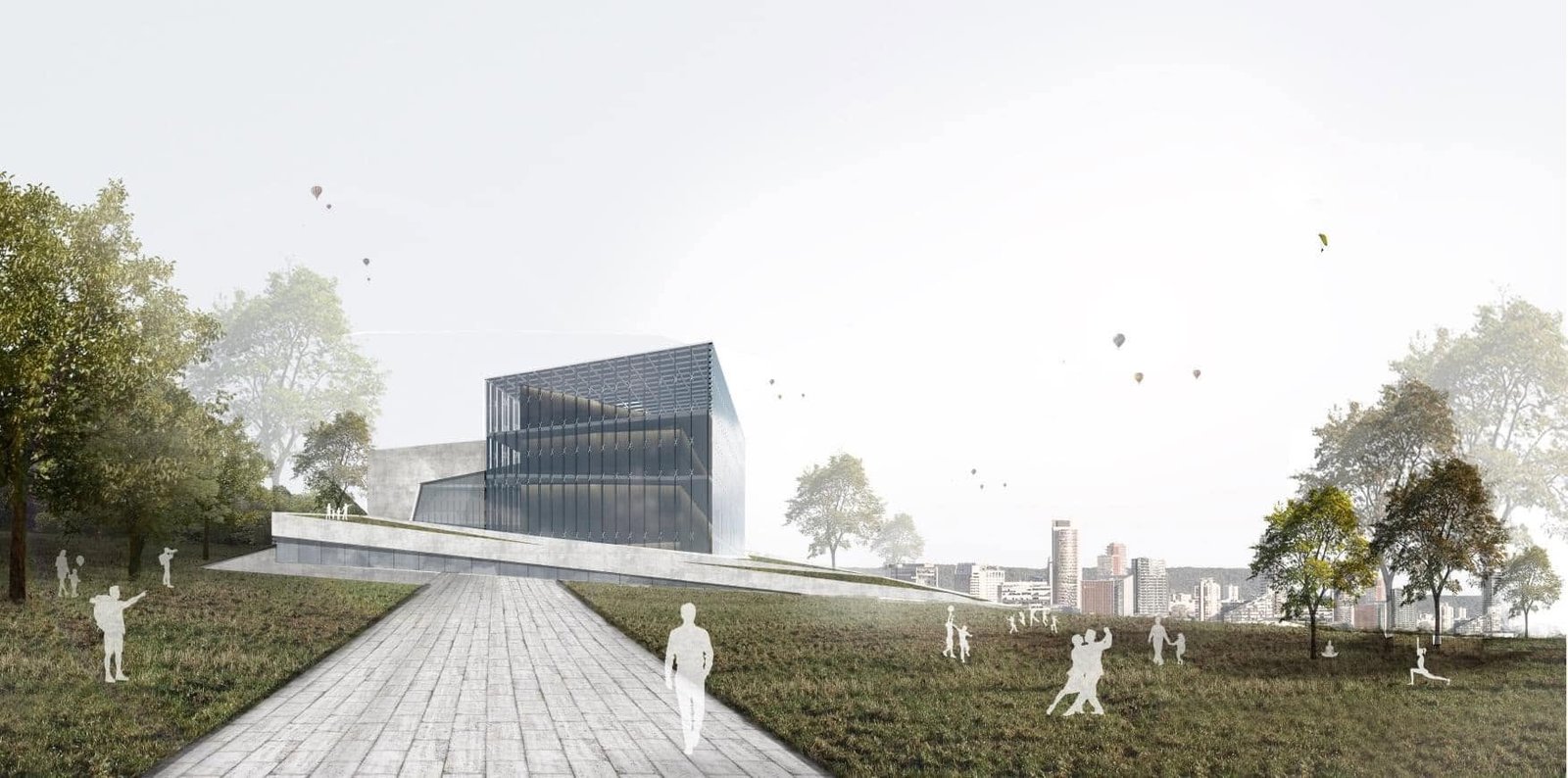
Partner-Z’s Vilnius Concert Hall publication identifies Lithuania and 2020, introducing the city through a relationship between historical and contemporary architecture. This presentation places urban context at the center of the project’s architectural narrative.
A project read through the city
The caption describes ‘The city between the historical and contemporary Architecture.’ That phrase invites the audience to consider the concert hall as part of a wider architectural setting.
A city contains relationships that extend beyond an individual building. Different periods, forms, and spaces can be understood together, creating a context within which a new architectural proposal takes its place. The source’s theme brings that larger view into the presentation.
The relationship between periods
Historical and contemporary architecture can be considered through how their forms relate, how spaces connect, and how the character of a setting is experienced. Those questions allow the audience to look at the city as a composition with more than one architectural voice.
The caption does not identify individual neighboring buildings or state a heritage designation. Its contribution is the broader urban theme, with the original image providing the visual account accompanying it.
A concert hall within a shared setting
A cultural building can be read in relation to the city it is intended to serve. The architectural presentation raises a question about how a distinct project identity can remain connected to the setting around it.
For Vilnius Concert Hall, the post expresses that question through the historical and contemporary relationship. The year is retained as 2020 and is not defined as a completion milestone.
The publication’s perspective
The studio presents the project with enthusiasm and a clear contextual theme. This article focuses on the theme rather than treating the promotional wording as a technical assessment. Its central subject is the city as architectural context: a Lithuanian concert hall presentation viewed through the relationship between historical and contemporary architecture.