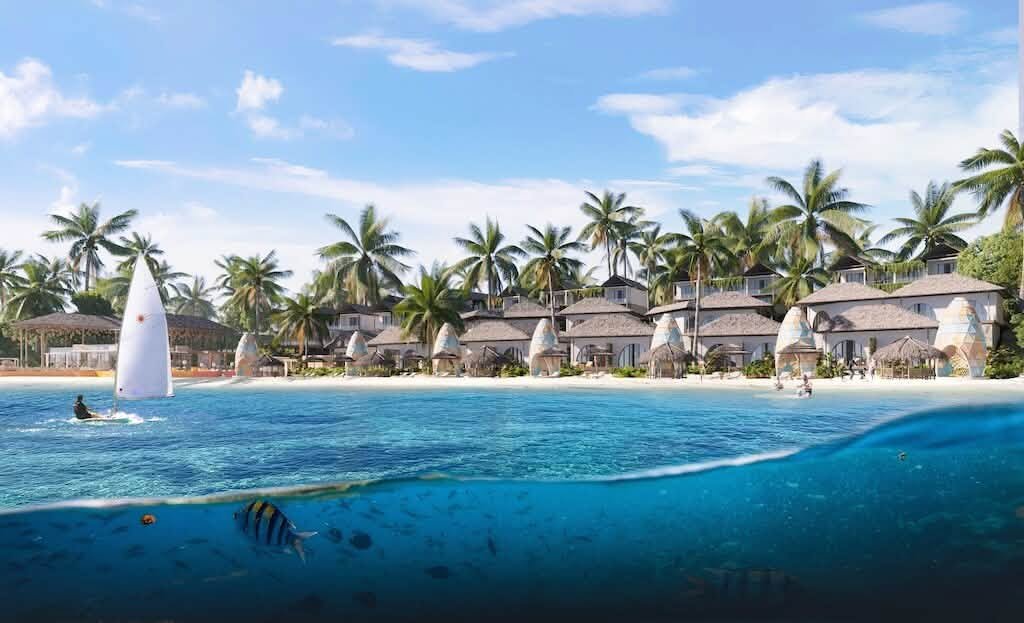
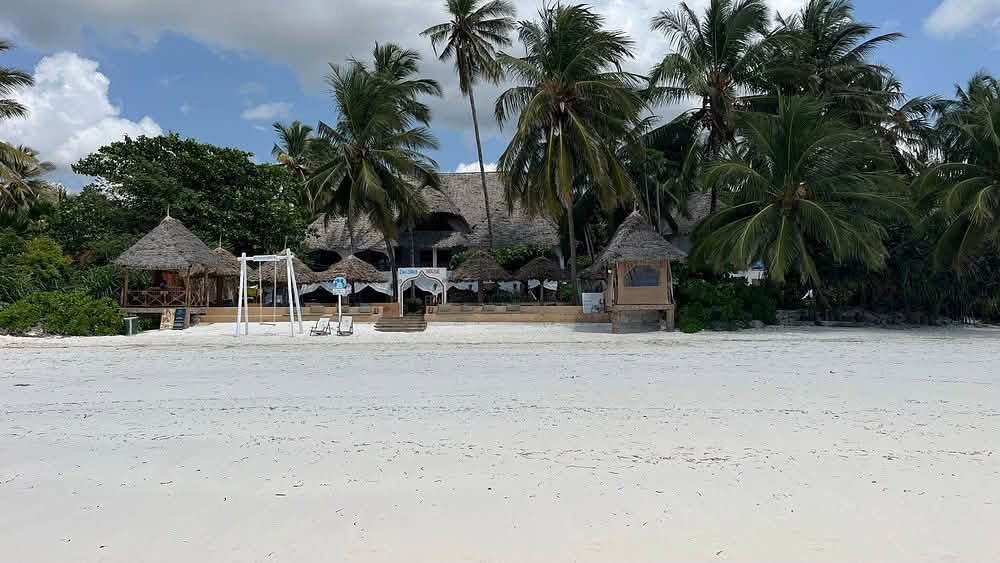
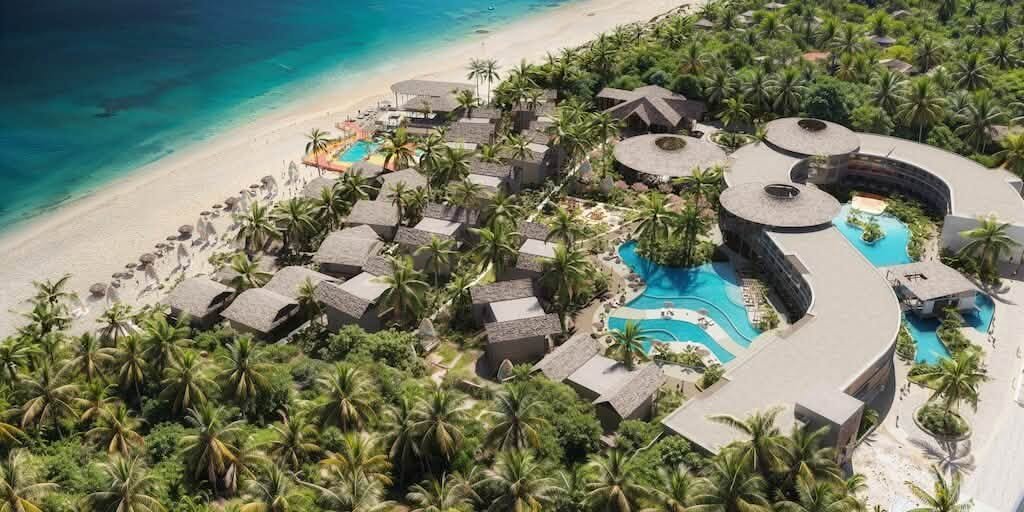
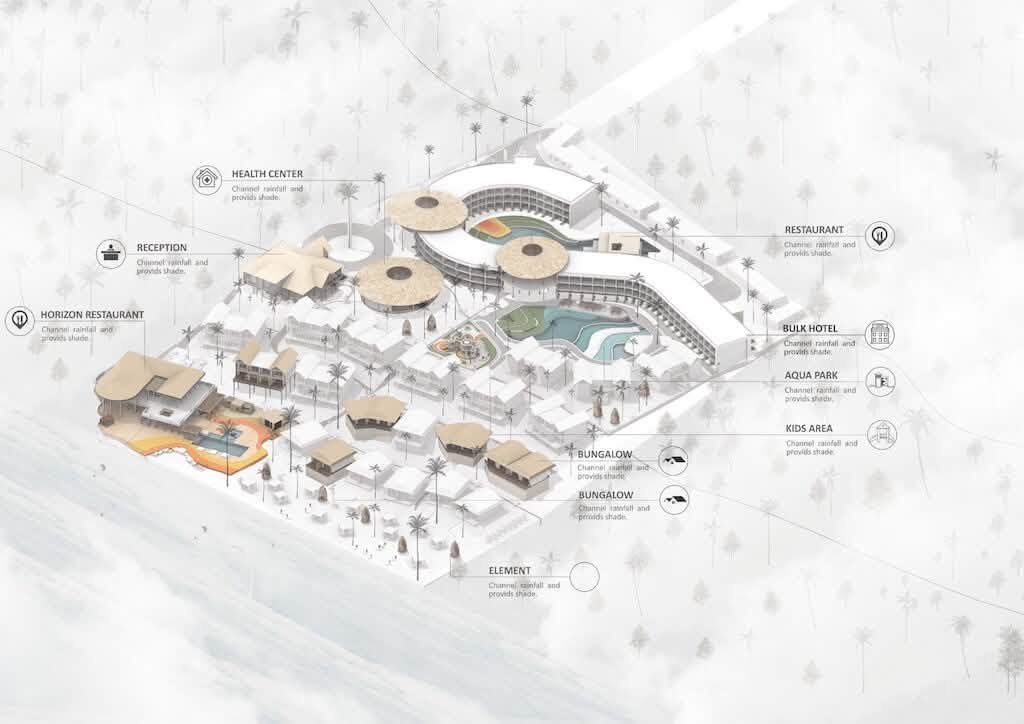
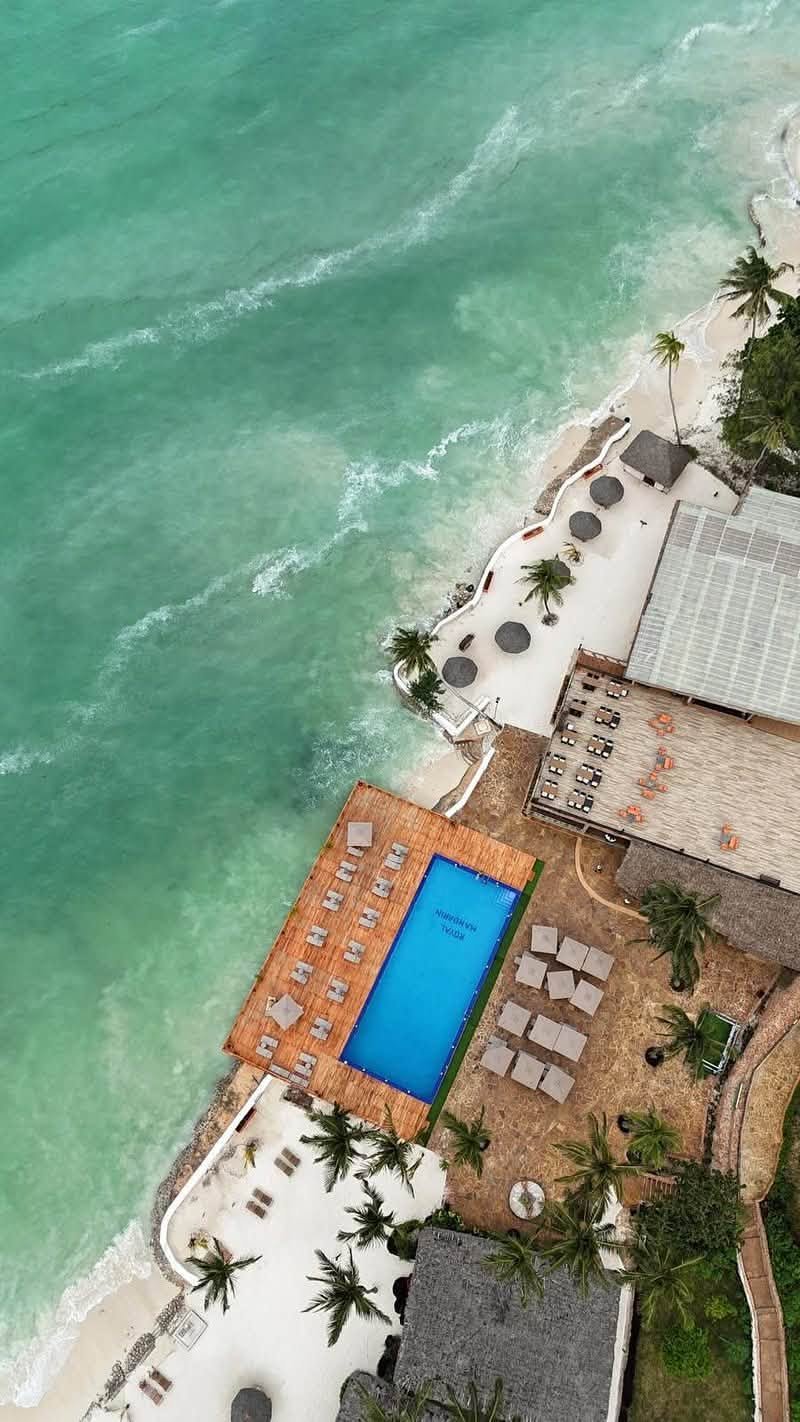
Royal Mandrine Resort is presented as a project in Zanzibar, Tanzania, with the year 2024. Its design brief brings together respect for nature, engagement with the local community, spaces for well-being, and a range of residential accommodation options. These are the stated intentions of the project, rather than verified operating outcomes.
Designing with nature
The project’s environmental direction calls for eco-friendly practices and materials that aim to minimize environmental impact. It also proposes using local flora and the natural landscape to create a close relationship between the resort and its surroundings.
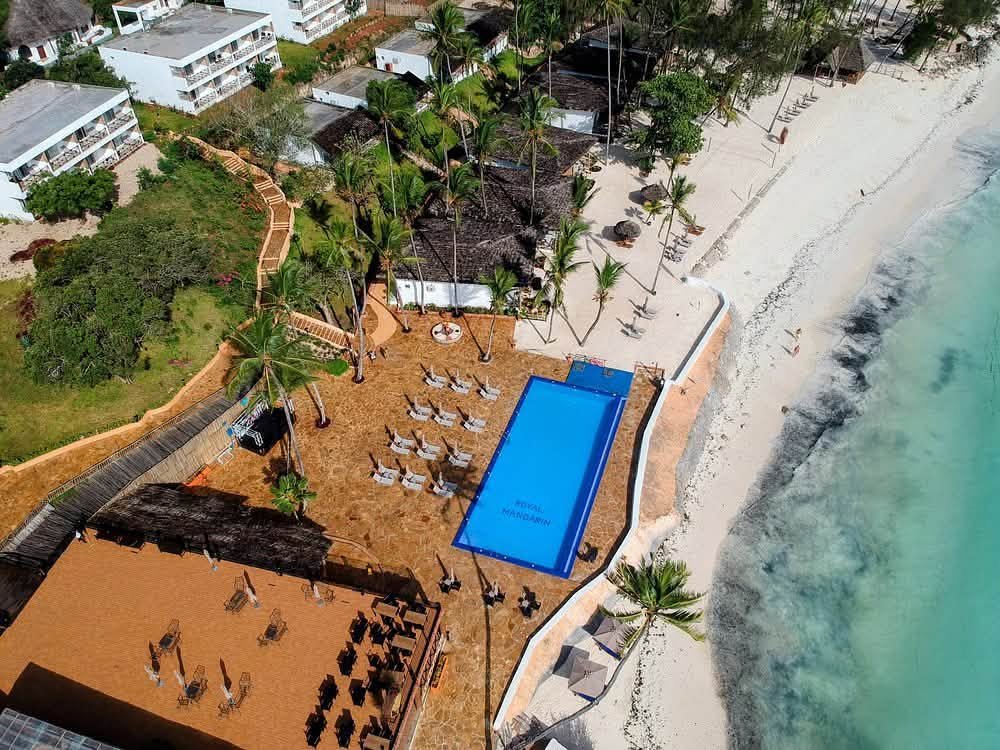
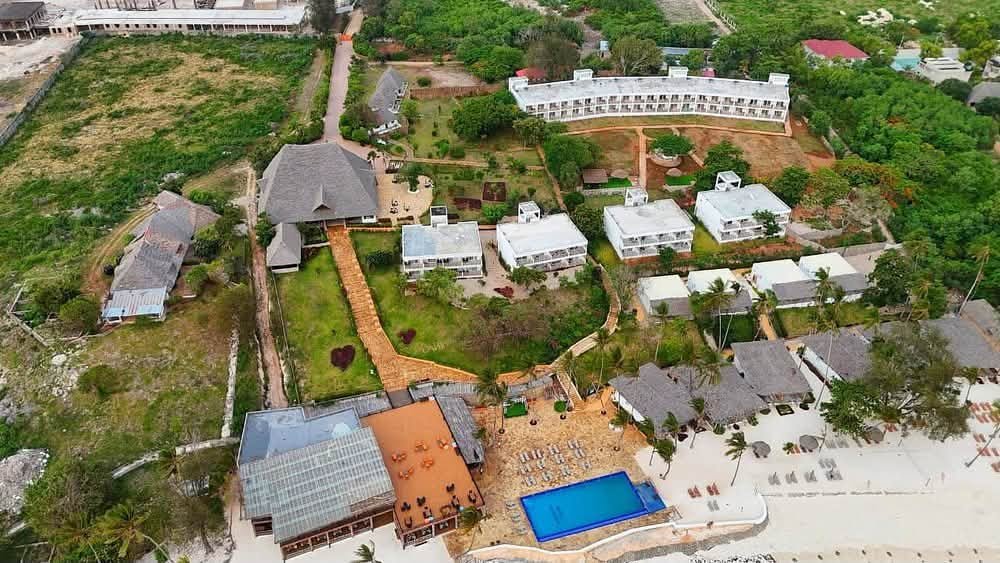
This approach places the setting within the design conversation. The landscape is part of the experience the proposal seeks to create, influencing how built spaces and outdoor areas can relate to one another. The original description does not identify specific materials, environmental certifications, or measured reductions in resource use.
Engaging the local community
The brief proposes collaboration with local artisans and businesses to incorporate cultural elements into the design. It also describes an intention to create community job opportunities and support a sense of ownership and pride.
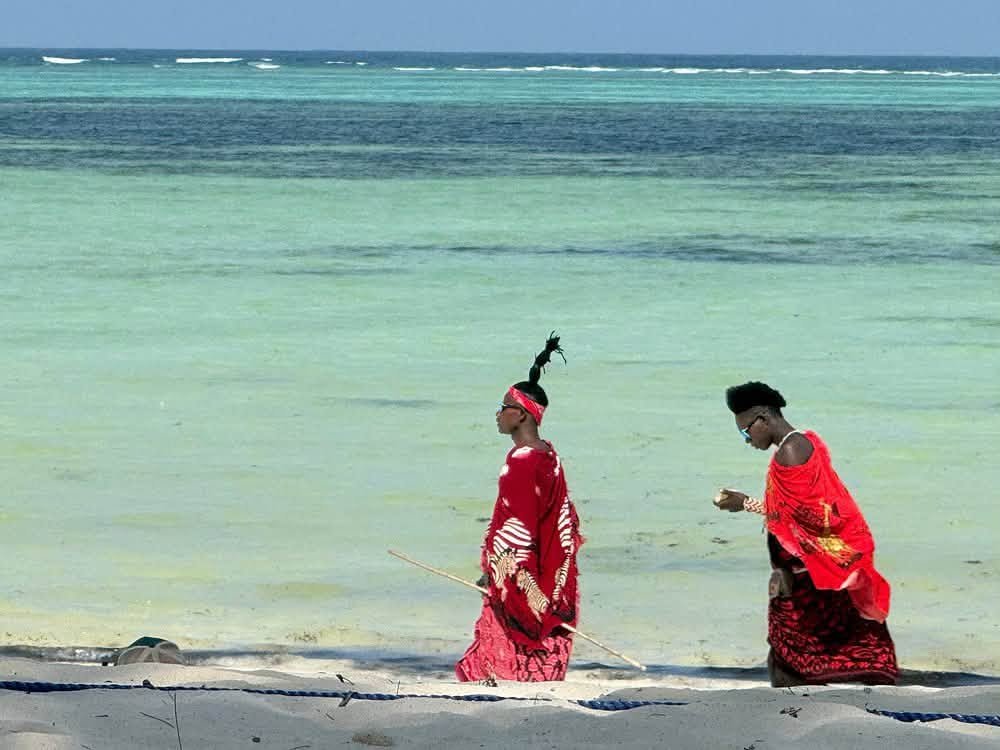
These aims connect the resort concept with the people and activities around it. Local participation can be considered in the character of spaces, the expression of craft, and the relationships involved in delivering a project. For Royal Mandrine Resort, the source establishes these as objectives; it does not document completed partnerships, employment numbers, or community outcomes.
Spaces that support well-being
Quality of life is another stated priority. The description calls for wellness areas, recreational facilities, and communal spaces that encourage social interaction among guests and local people.
Together, these components describe a resort experience that includes rest, activity, and connection. Their architectural purpose is to support different ways of spending time, from individual well-being to shared experiences. The source does not provide a final facilities schedule or operational information.
Residential options and the guest experience
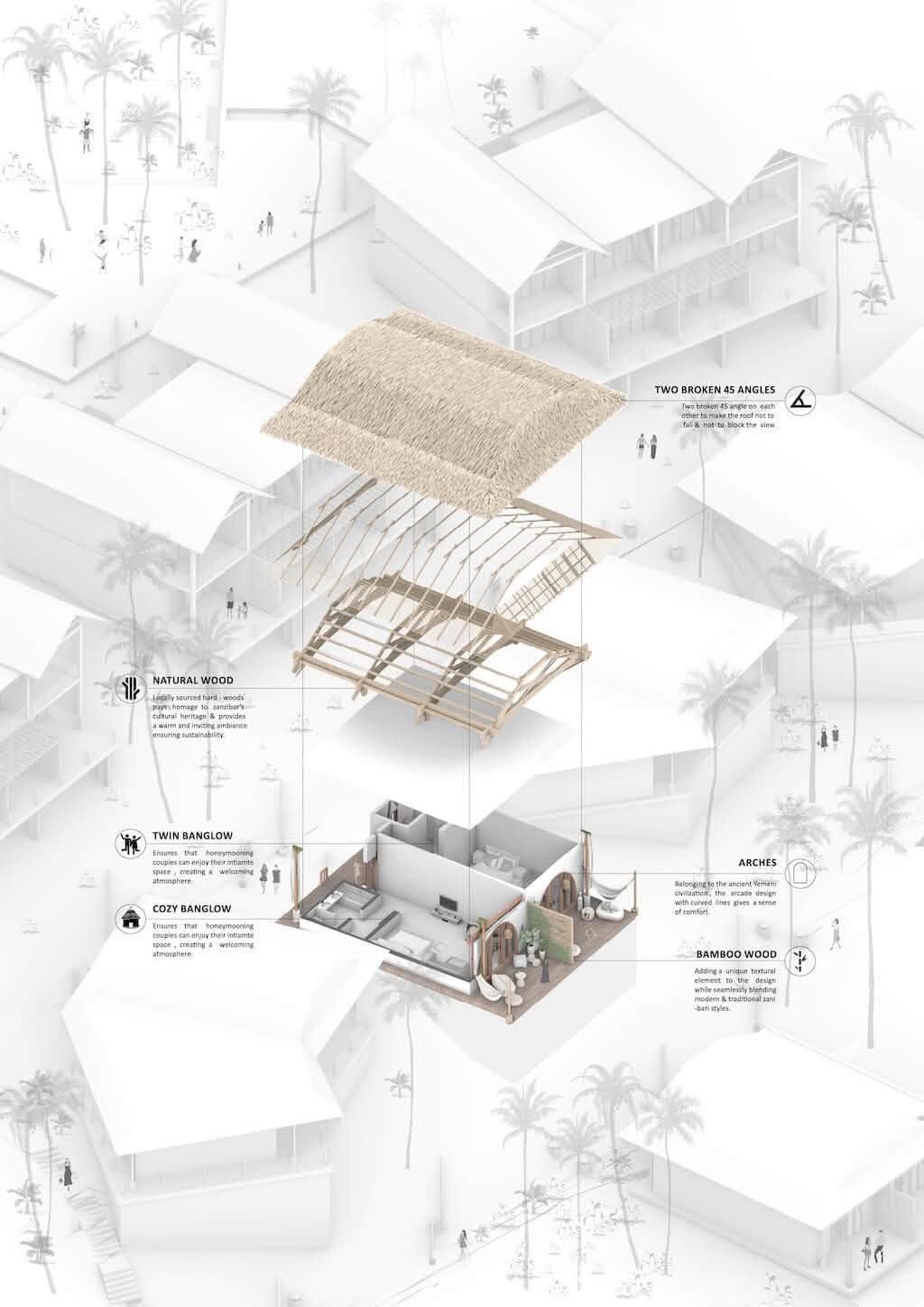
The brief proposes a variety of residential options, with villas, bungalows, and eco-lodges given as examples. The intention is to respond to different guest preferences and budgets while supporting comfort and an immersive experience of the local culture. These examples describe the range under consideration; they do not confirm a final inventory of accommodation.
A connected design direction
Nature, community, well-being, and residential choice form the central framework of the Royal Mandrine Resort presentation. Its value lies in considering those priorities together: accommodation relates to landscape, shared spaces relate to social experience, and cultural expression relates to local participation. The stated year is 2024, but the caption does not define a completion milestone. The article and accompanying gallery therefore present the project’s design direction within the information supplied.