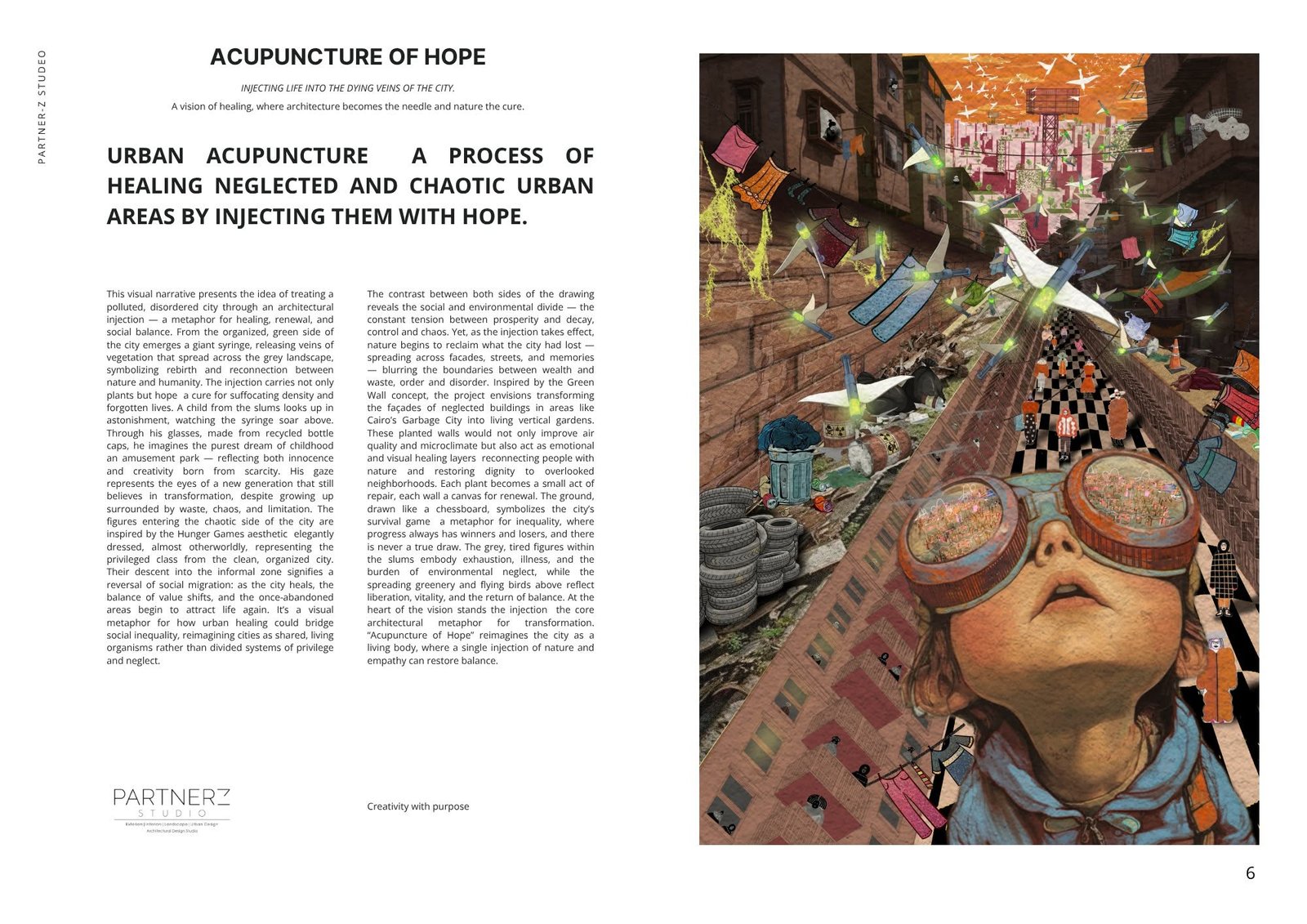
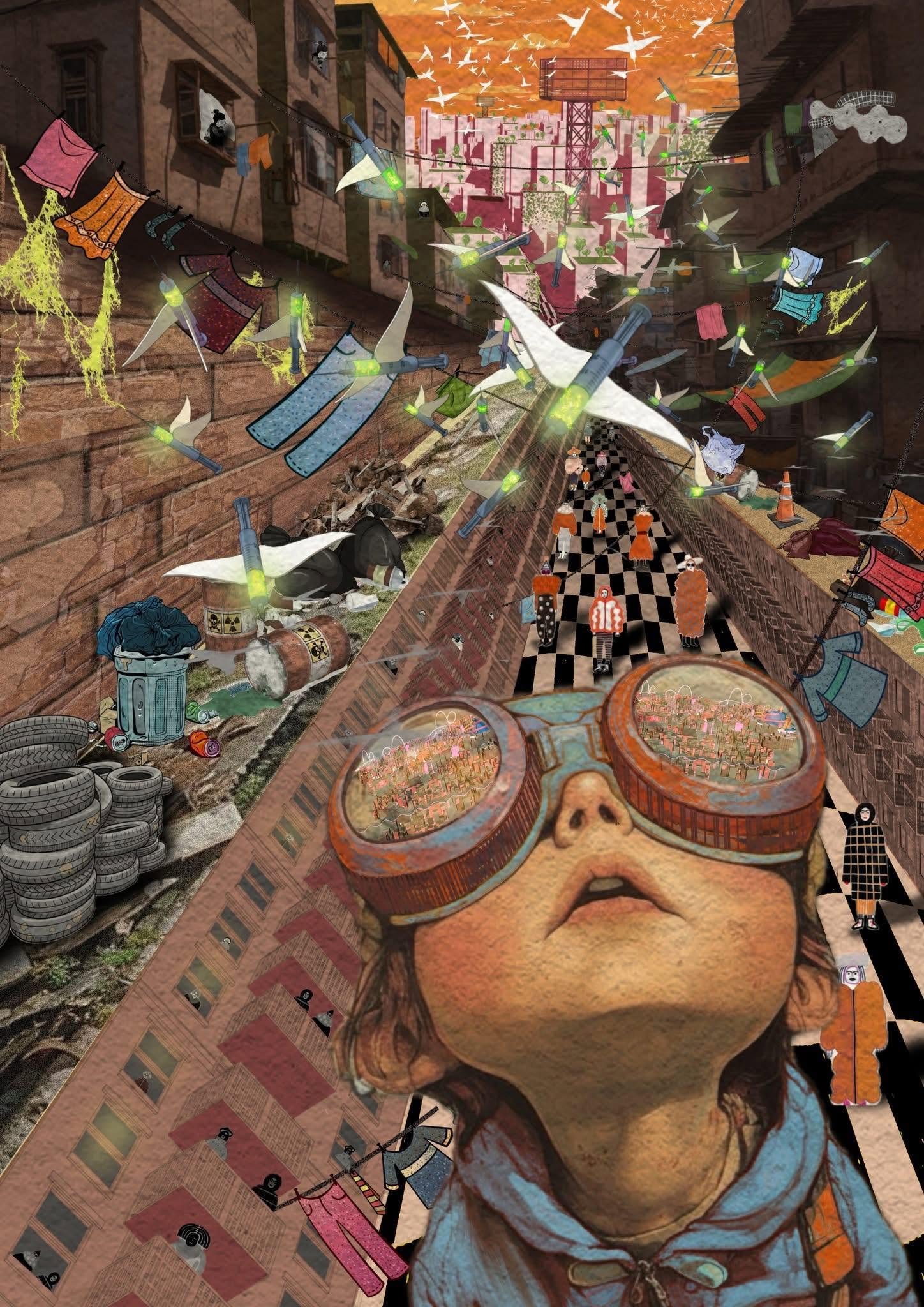
Partner-Z describes architectural drawing as a way to create and communicate the story of a project. This publication connects the team’s pencils, analysis, and creative illustrations with the belief that every project should have a unique story. The original drawing publication was shared from Ahmed A Batea, whose credit is retained with the work.
A story gives the design direction
An architectural story can establish what a project is trying to achieve and why its parts belong together. It gives a concept a central thread that can be followed as the work develops.
That thread becomes useful when it is expressed through decisions. A drawing can show how an idea organizes space, how one element relates to another, or which question is being explored. The story becomes something the team can examine rather than a phrase that stands apart from the design.
Drawing as a way to develop an idea
The source places pencils at the beginning of the presentation process. Drawing can be an active part of thinking: a mark proposes a relationship, and the next mark tests or develops it.
This makes an illustration useful before it reaches the stage of a finished presentation. It can reveal where an idea is clear and where it needs further work. The drawing helps the team turn an emerging intention into something visible.
Connecting narrative and analysis
Partner-Z’s caption also emphasizes representing the project’s issues and the analysis it needs. A convincing story must remain connected to those questions. Analysis gives the narrative something concrete to respond to, while the narrative helps the individual observations form a coherent direction.
The publication does not identify a specific project or its findings. Its subject is the studio’s way of connecting analytical work with creative communication.
The gallery as part of the story
The drawings accompanying this post are the visual material associated with that message. They should be viewed as the published sequence through which the studio introduces its approach.
This article focuses on the narrative role of drawing: making the project’s central idea visible, keeping the questions connected, and helping a developing design communicate a story of its own.