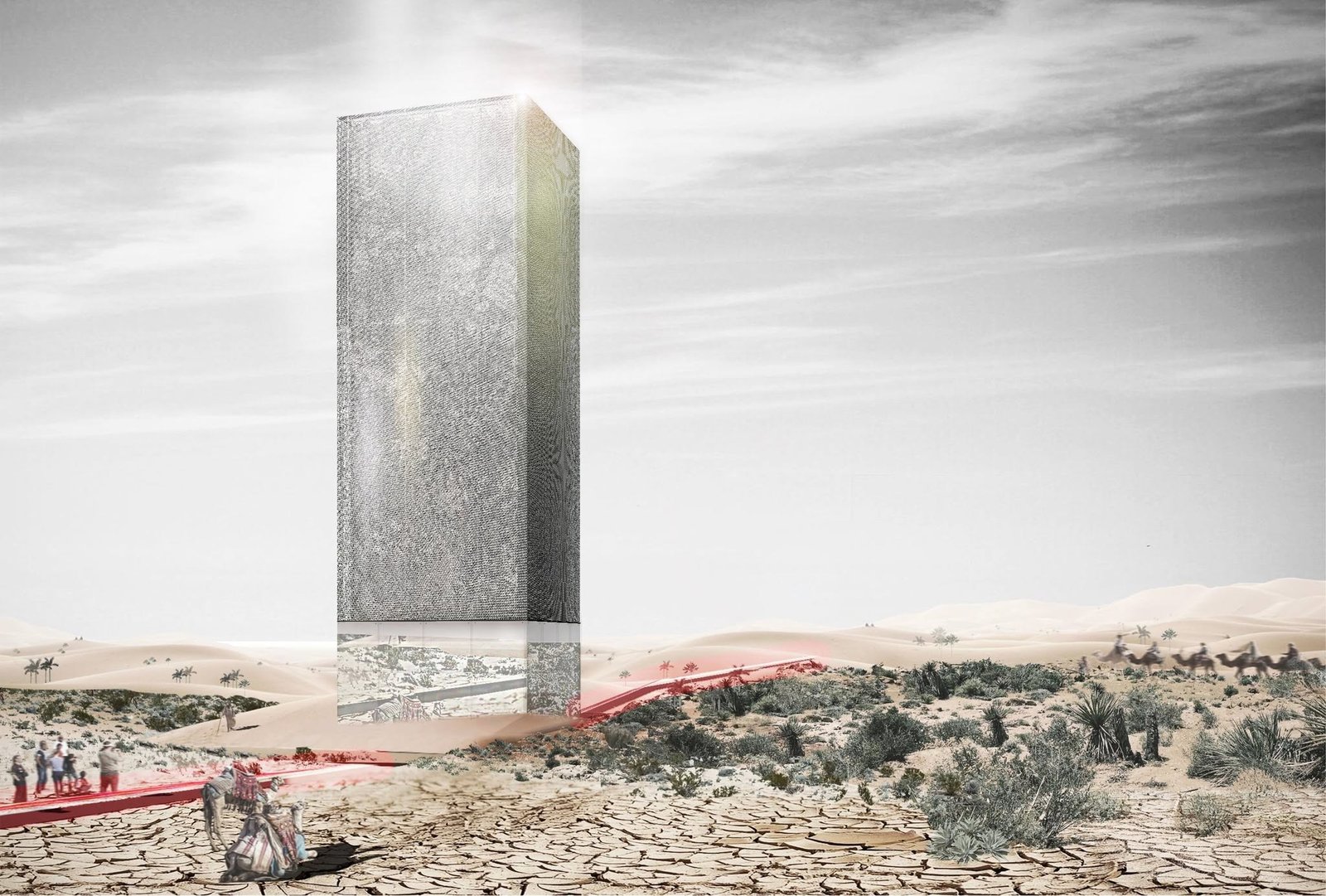
Black Box is a 2019 monumental-skyscraper concept in New Alamein City, Egypt, as identified by this post. Its central ambition is an archive for future generations: a place imagined to preserve records of cultures, languages, religions, and human life that might otherwise be lost.
An Archive for the Future
The project’s vision begins with a lack of knowledge about the past and the disappearance of cultures around the world. It turns that concern into an architectural proposition, asking how the present and the past could be recorded for people who come after us.
The name Black Box gives the proposal its organising metaphor. A recorder preserves evidence so it can be examined later; the project extends that idea to the scale of the earth and human history. It is described as an archive of past and present for the future.
The ambition is broad. The source names human life, culture, religions, languages, and the earth among the things the concept seeks to record. These are the themes of the proposal, without a specified collection policy, digital system, or operating institution.
A Monumental Architectural Form
The caption identifies the architectural type as a monumental skyscraper. In the stated vision, that form gives cultural memory a visible presence in an otherwise abandoned desert setting. The monument and the archive are conceived together: one expresses the scale of the question, while the other describes its purpose.
The image belongs to that conceptual presentation. The post does not establish an actual storage capacity, a completed structure, or the successful preservation of records. Its contribution is the idea of treating endangered knowledge as an architectural subject.
Keeping This Publication’s Project Reference
This source labels the project 2019 and names New Alamein City, Egypt. Those details are retained here as part of this publication’s record. Separate presentation sheets may carry their own printed labels; the article does not rewrite this caption to make those sources identical.
Black Box frames architecture as a vessel for memory. Its vision asks what future generations should be able to learn about a world whose languages, practices, and records can disappear, and imagines a monumental archive as a response.