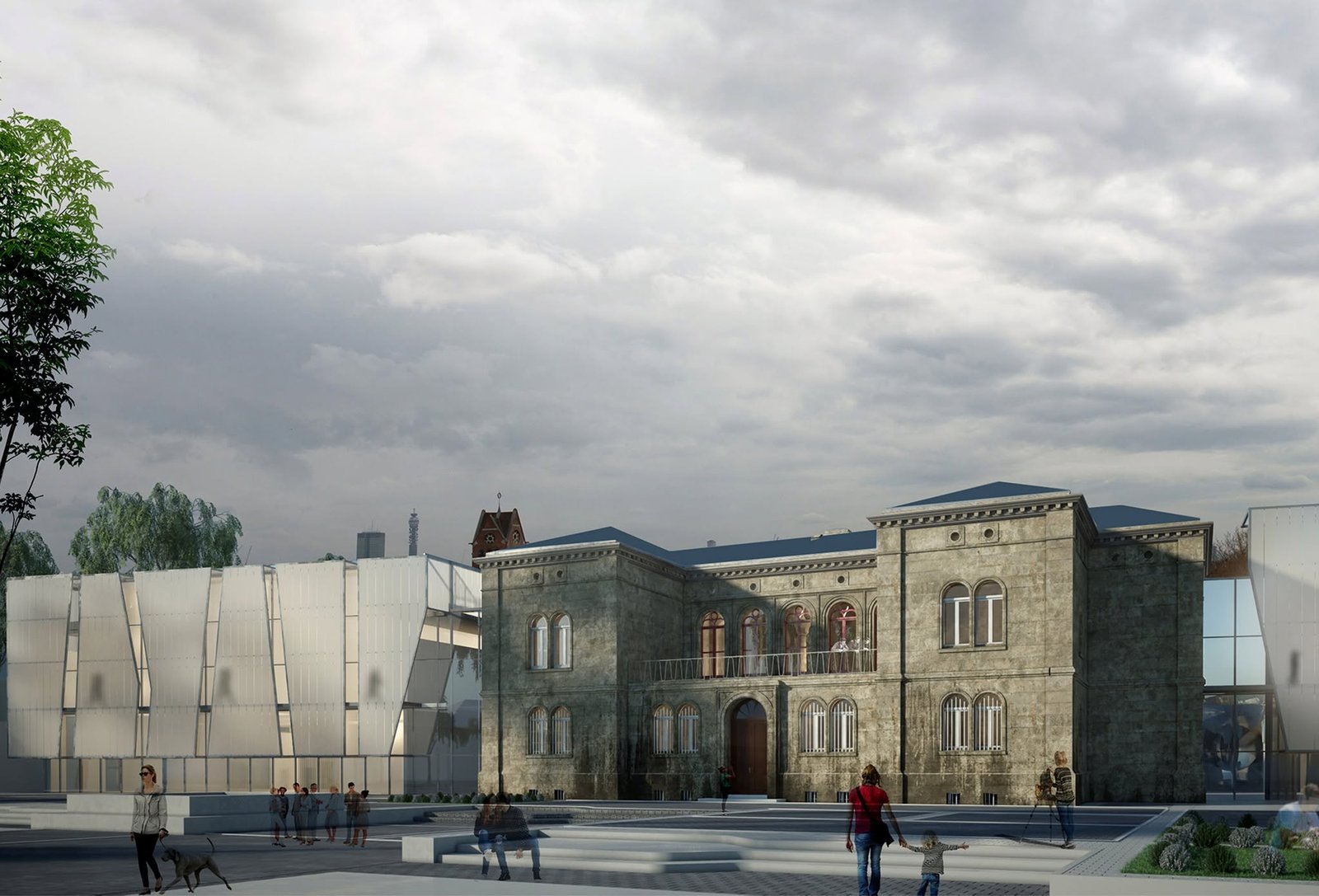
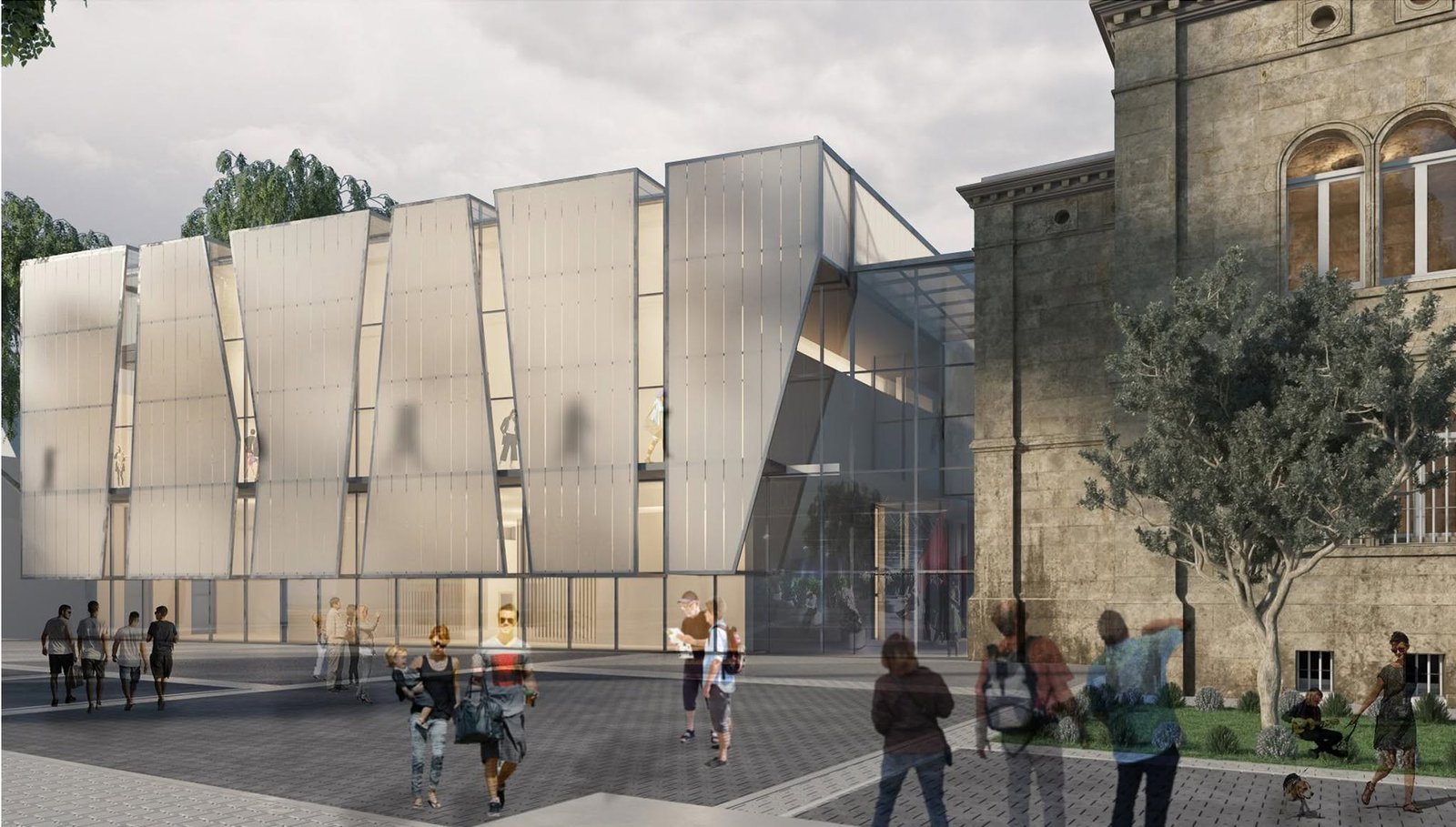
Behind the Curtain is a 2018 theatre vision for Naumburg, Germany. The proposal uses the curtain as a metaphor for revealing the city’s future through a relationship with its past, considering a former prison as the setting for a new cultural role.
What Lies Behind a Theatre Curtain
The original vision begins with a spectator’s limited view of a performance. Beyond the red curtain are artists, staff, equipment, and scenery that remain unseen. The project turns that hidden side of the theatre into a way of thinking about the city.
In the proposal, the curtain is also a question: what possibilities might be revealed when an existing place is seen differently? The source connects this question to the future of Naumburg and the meanings that can be carried by architecture.
A Relationship between Past and Future
The caption identifies an old focal point associated with a former prison and imagines its cultural role in the form of a theatre. That change is presented as a design ambition, linking an existing urban story with a possible future.
The project is interested in more than a new use alone. Its vision asks how a place with layered meanings could offer the city a renewed cultural presence. The former prison becomes part of that story rather than an anonymous setting.
The source does not specify a construction phase, conservation method, or completed adaptation. The relationship between past and future is the principle guiding the proposal.
Revealing a New Cultural Presence
The stated ambition is for the theatre to offer Naumburg a new cultural breath and become a landmark capable of attracting visitors. These are intended outcomes in the project vision. They do not establish actual visitor numbers or a realised effect on the city.
The curtain metaphor brings those aims together: a familiar boundary between what is visible and what is hidden becomes a way to imagine new possibilities.
Reading the Original Proposal
The accompanying images preserve the visual presentation of Behind the Curtain. Together with the 2018 caption, they record a theatre concept focused on history, revelation, and cultural identity. The proposal asks how architecture might make a different future visible within an existing urban place.