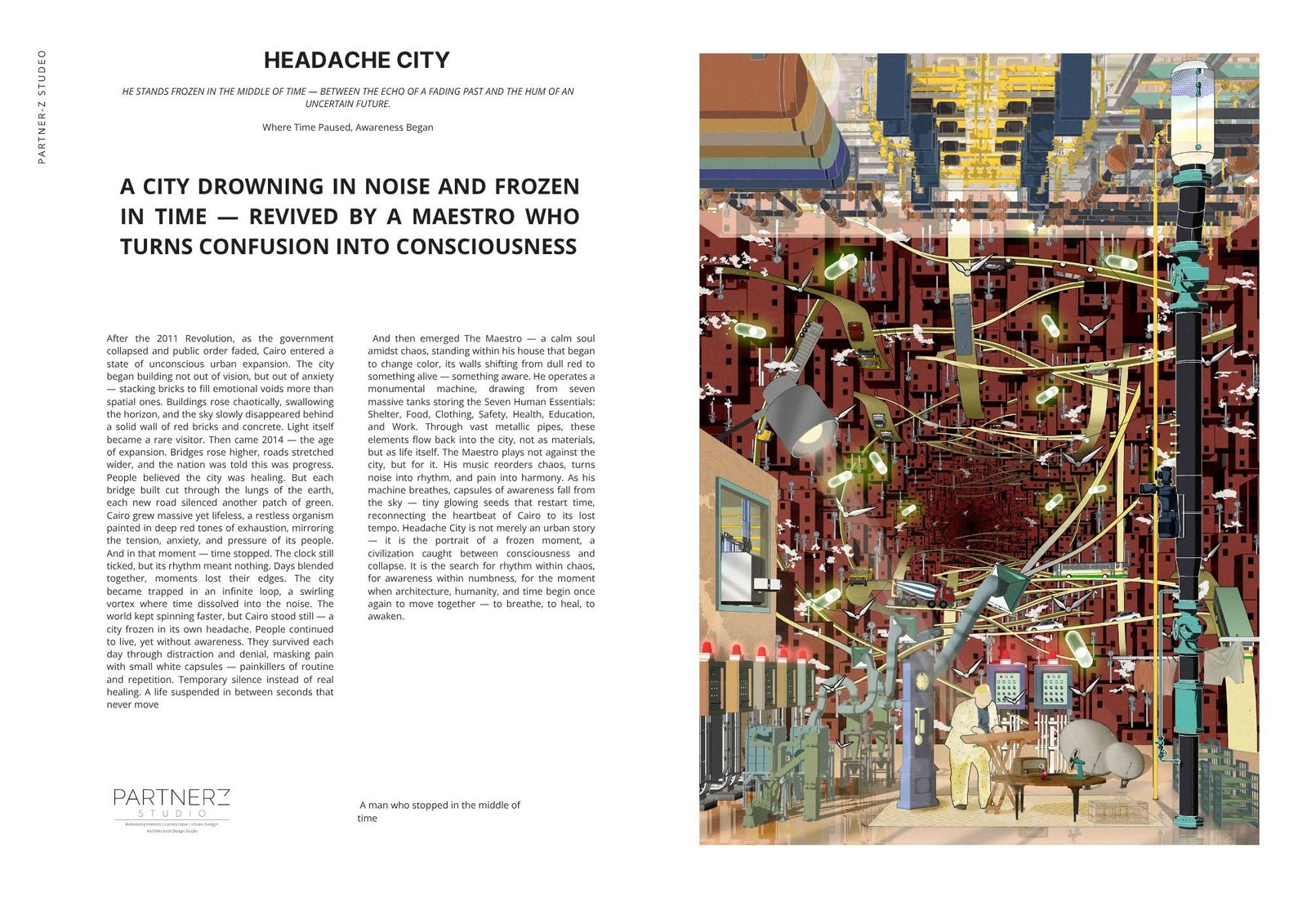
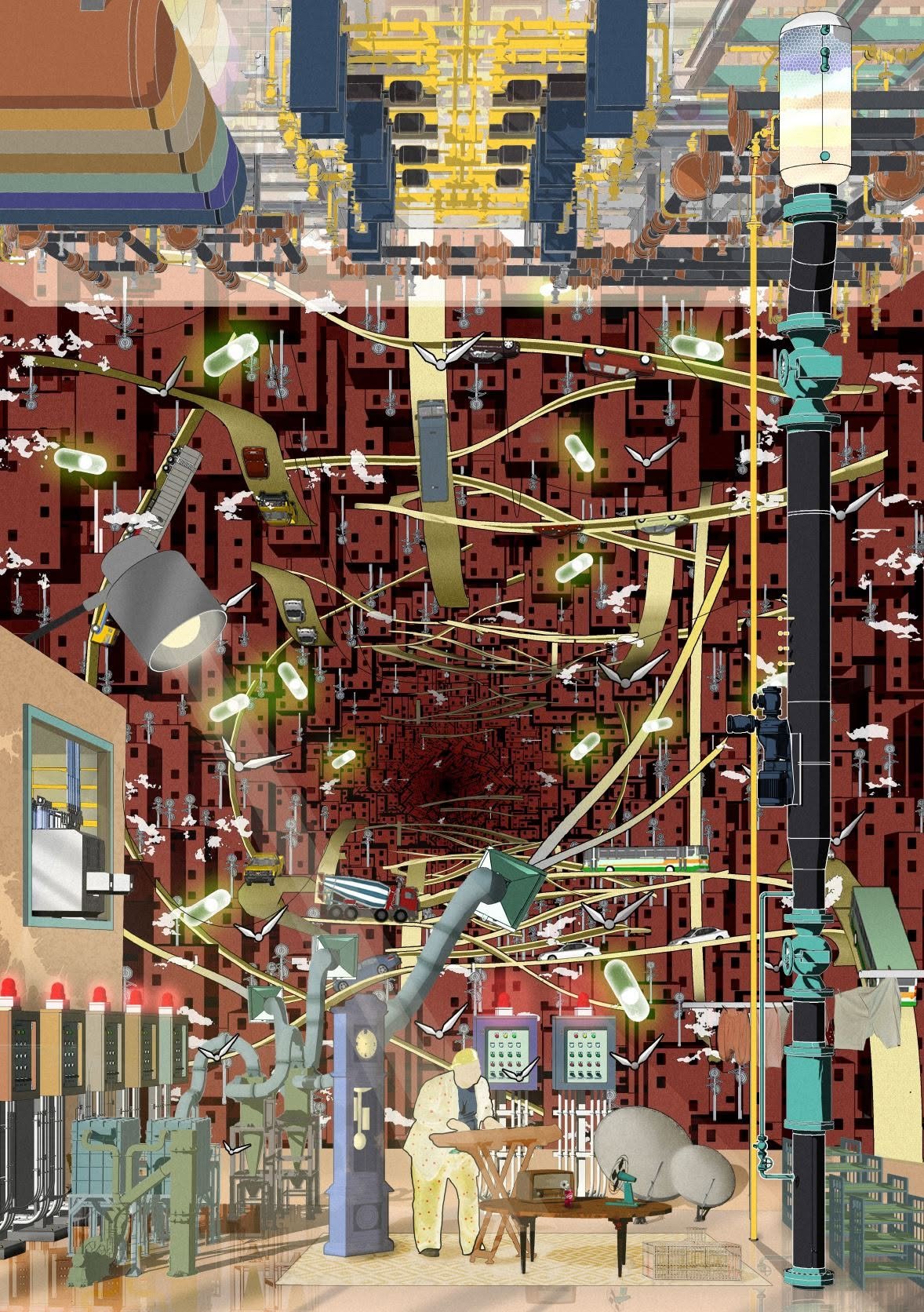
Architectural illustration can make a project’s thinking easier to understand. Partner-Z’s drawing publication describes its creative team using pencils and illustrations to present a project’s story, its issues, and the analysis behind its development. The original drawing publication was shared from Ahmed A Batea, whose credit is retained with the work.
Give the audience a point of entry
An illustration offers a way into an architectural idea. It can bring attention to a relationship that might be difficult to explain through words alone and help the audience follow the intention behind a proposal.
The useful starting point is clarity. The reader needs to understand what a drawing is trying to communicate and how it relates to the project’s central idea. Visual expression works best when the purpose of the representation is apparent.
Communicate the reasoning
The original caption connects creative illustrations with analysis. That connection gives an illustration a role beyond presenting a finished appearance. It can show the reasoning that supports a direction and make the team’s questions available for discussion.
A sequence of drawings can also support a sequence of ideas. One representation may establish the starting point, while another helps the audience understand a relationship or a proposed response. These are general communication possibilities, not claims about the individual drawings in the gallery.
Keep expression and accuracy together
A compelling architectural illustration should remain faithful to what the design actually proposes. Creative choices can help an audience notice the important parts of an idea, while accuracy keeps the presentation connected to its purpose.
Partner-Z’s statement about every project having a unique story gives this process an overall direction. The illustration serves that story by making its architectural thinking accessible.
The published drawing sequence
This post presents a drawing gallery with the studio’s shared statement about its creative approach. It does not name a project, place, or year, so the article focuses on communication through architectural illustration.
The central question is how a drawing can help an audience understand the ideas behind a project: what matters, how the parts connect, and why the proposed direction deserves attention.